

Categories
PurchasingPublished September 28, 2026
Market Value vs. Appraised Value: What Homebuyers and Sellers Need to Know

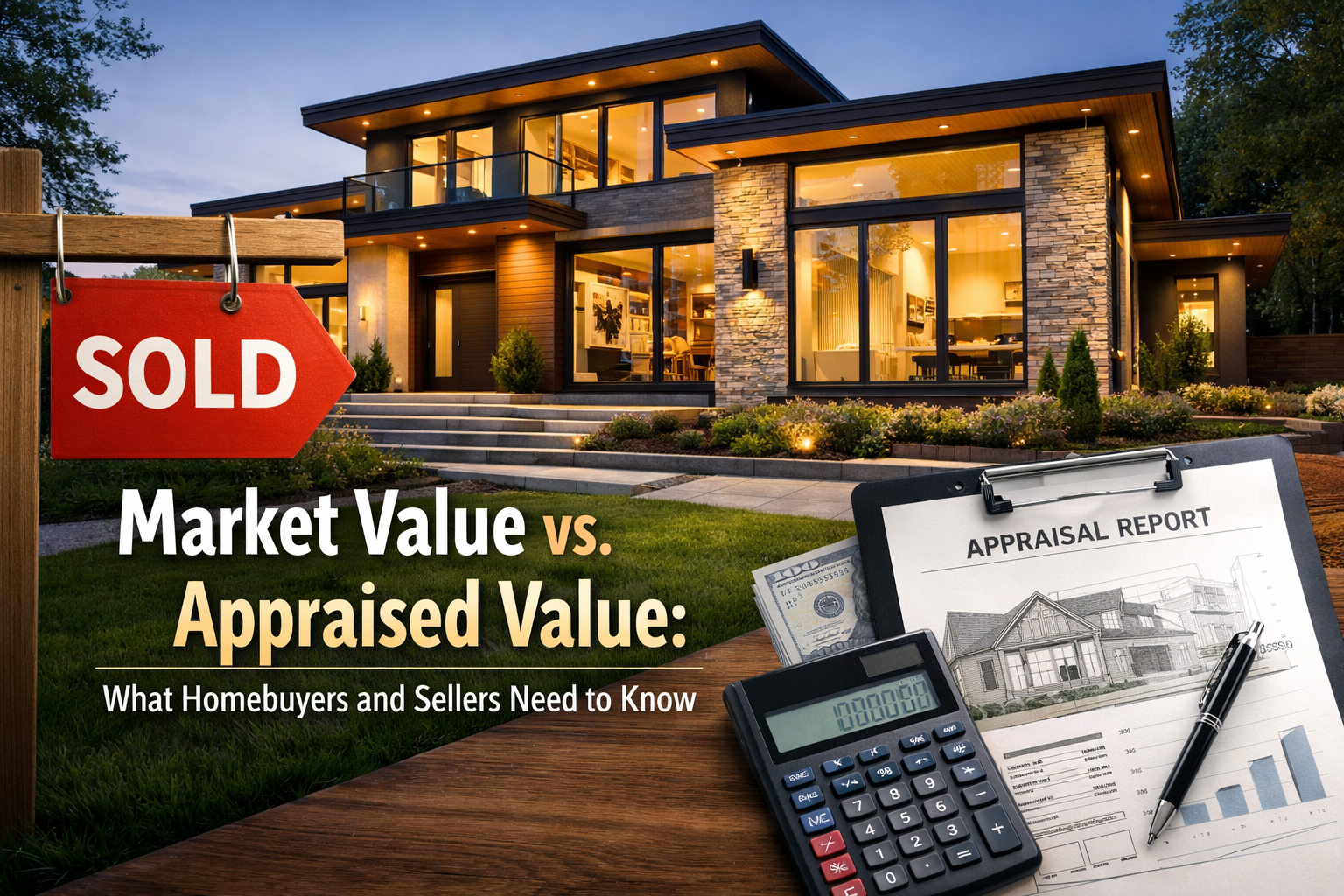
When buying or selling a home, it is common to hear terms like market value and appraised value used as if they mean the same thing. They are related, but they are not identical. Understanding the difference can help buyers make stronger offers, help sellers price homes more strategically, and help both sides navigate surprises during a transaction.
At Legacy Realty Partners, we believe informed clients make more confident real estate decisions. Here is what market value and appraised value mean, how each is determined, why they can differ, and what to do if an appraisal comes in lower than expected.
What Is Market Value?
Market value is the price a buyer is willing to pay and a seller is willing to accept for a property under current market conditions. In simple terms, it reflects what the market says a home is worth at a given moment.
Market value is influenced by real-world activity and buyer behavior. It can shift based on timing, inventory levels, interest rates, neighborhood appeal, and how much competition exists for similar homes.
Because market value depends on what active buyers are willing to do, it is not a fixed number. It is better understood as a realistic range shaped by current demand and comparable properties.
What Is Appraised Value?
Appraised value is a professional opinion of a property’s value prepared by a licensed appraiser. In many transactions, the appraisal is ordered by the lender to help determine whether the property supports the loan amount being requested.
An appraisal is intended to provide an independent, documented valuation based on recognized appraisal methods and standards. While it often overlaps with market expectations, it serves a different purpose. The appraiser is not trying to predict the highest possible offer. Instead, the appraiser is developing a supported opinion of value using available data, property characteristics, and appraisal guidelines.
How Market Value Is Determined
Market value is shaped by the interaction between buyers, sellers, and current market conditions. Real estate agents typically estimate likely market value by analyzing:
- Comparable sales: Recent sales of similar homes in the area help establish a reasonable pricing range.
- Active competition: Current listings and pending sales show what buyers are seeing and choosing right now.
- Location: School access, commute patterns, neighborhood reputation, views, lot characteristics, and nearby amenities can all affect demand.
- Condition and updates: A well-maintained home with desirable improvements may attract stronger offers than a similar home needing repairs.
- Buyer demand: In a competitive market, multiple offers can push the sale price above expectations. In a slower market, buyers may negotiate more aggressively.
- Pricing strategy and presentation: Professional marketing, staging, photography, and pricing can influence how buyers respond.
Ultimately, market value is tested in real time when a property is exposed to the market and buyers decide what they are willing to pay.
How Appraised Value Is Determined
Appraised value is determined through a more formal valuation process. While methods can vary depending on the property and assignment, appraisers commonly consider:
- Comparable sales: Recent closed sales of similar properties are a major part of the analysis.
- Property condition: The appraiser evaluates the home’s overall state, quality, layout, features, and visible maintenance issues.
- Location: The surrounding area, site characteristics, neighborhood influences, and marketability matter.
- Size and functionality: Square footage, bedroom and bathroom count, floor plan, garage space, and usability can affect value.
- Market trends: Appraisers may consider whether values appear stable, rising, or softening based on available evidence.
- Appraisal standards: Appraisers follow professional standards and lender requirements designed to support a credible, documented opinion of value.
In financed transactions, the lender uses the appraisal as part of its risk review. Even if a buyer is willing to pay more, the lender may focus on the appraised value when deciding how much it is willing to lend.
Why Market Value and Appraised Value Can Differ
It is completely possible for market value and appraised value to be close together, but they can also differ. That does not automatically mean one is right and the other is wrong. They are simply measuring value from different perspectives.
Common reasons they may differ include:
- Rapid market changes: Buyer demand can move faster than closed-sale data, especially in a fast-rising or shifting market.
- Limited comparable sales: Unique homes or neighborhoods with few recent sales can make valuation more challenging.
- Property condition differences: Buyers may respond emotionally to upgrades or design choices that do not translate dollar-for-dollar in an appraisal.
- Multiple-offer situations: Competitive bidding can push a contract price above the range suggested by recent comparable sales.
- Conservative lending standards: Lenders and appraisers may rely on documented support and established standards rather than the most optimistic market interpretation.
- Timing: A home may have been priced or contracted under one set of conditions, while the appraisal reflects another snapshot of the market.
In short, market value reflects what the market may be willing to do, while appraised value reflects a supported professional opinion developed under appraisal standards.
The Role of Comparable Sales
Comparable sales, often called “comps,” are central to both pricing and appraising a home. They help create a benchmark by looking at similar properties that have sold recently.
Strong comparable sales are usually similar in location, size, age, style, condition, and features. However, no two homes are exactly alike. That is why both agents and appraisers make adjustments and use judgment when comparing properties.
Comparable sales are important, but they are not the only factor. A home’s condition, lot, upgrades, layout, and current buyer demand can all influence how those comps are interpreted.
The Role of Condition, Location, and Buyer Demand
Condition matters because buyers and appraisers both notice deferred maintenance, outdated finishes, and major improvements. A clean, well-cared-for home often creates a stronger impression and may compare more favorably to recent sales.
Location matters because even homes with similar features can perform differently based on street appeal, proximity to amenities, views, traffic patterns, and neighborhood desirability.
Buyer demand matters because value in the marketplace is influenced by competition. If several buyers want the same home, the contract price may rise quickly. If demand is softer, sellers may need to adjust expectations.
These factors affect both market value and appraised value, but not always in exactly the same way or to the same degree.
The Role of Lender Requirements and Appraisal Standards
When financing is involved, the lender is not simply evaluating whether the buyer loves the home. The lender is also evaluating collateral risk. That is why lender requirements and appraisal standards play such an important role.
The appraisal helps the lender decide whether the property appears to support the loan amount. Appraisers are expected to follow professional standards, document their reasoning, and use credible data. As a result, an appraisal may feel more conservative than the excitement of an active market.
It is also important to remember that an appraisal is one part of the lending process. A contract price alone does not guarantee loan approval, just as an appraised value alone does not guarantee a final sale price.
What Happens If an Appraisal Comes In Low?
A low appraisal means the appraised value came in below the agreed contract price. This can create a challenge in a financed transaction because the lender may base the loan amount on the lower appraised value rather than the contract price.
That does not always mean the deal is over. It usually means the parties need to evaluate their options and decide how to move forward.
Common Options for Buyers and Sellers After a Low Appraisal
- Renegotiate the price: The seller may agree to reduce the purchase price to align more closely with the appraised value.
- Buyer brings additional cash: The buyer may choose to cover some or all of the gap between the appraised value and the contract price, depending on loan terms and available funds.
- Split the difference: Buyer and seller may agree to share the gap through a negotiated adjustment.
- Request an appraisal review or reconsideration: If there are factual errors or stronger comparable sales that were not considered, the lender may allow a formal review process.
- Challenge the deal terms within the contract: Depending on the contract and contingencies, one or both parties may have options to renegotiate or cancel.
- Move forward differently: In some cases, parties may revise financing structure or timing if appropriate and available.
The best path depends on the contract, the financing, the strength of the market, and each party’s goals.
Practical Tips for Preparing for an Appraisal
While no one can control the final opinion of value, sellers can take practical steps to present the property well and support the process:
- Make sure the home is clean, accessible, and well maintained for the appointment.
- Address obvious minor repairs where possible, such as touch-up paint, loose hardware, or damaged fixtures.
- Prepare a list of meaningful upgrades, renovations, and improvements with approximate dates.
- Share relevant property details that may not be obvious, such as energy-efficient features, lot benefits, or recent system replacements.
- Work with your real estate agent to provide strong comparable sales and market context when appropriate.
- Keep expectations realistic and understand that not every improvement adds value dollar-for-dollar.
Practical Tips for Pricing a Listing
For sellers, pricing a home correctly from the start can help reduce appraisal issues and improve overall results. Consider these best practices:
- Review recent comparable sales carefully rather than relying only on online estimates.
- Pay attention to active listings and pending sales that reflect current competition.
- Consider the home’s condition honestly, including updates, deferred maintenance, and buyer appeal.
- Factor in location advantages and disadvantages realistically.
- Avoid assuming that the highest possible price is automatically the best strategy.
- Work with an experienced real estate professional who understands pricing, positioning, and negotiation.
Quick Comparison: Market Value vs. Appraised Value
- Market value: What buyers may be willing to pay under current market conditions.
- Appraised value: A licensed appraiser’s supported opinion of value, often used by a lender.
- Market value is influenced heavily by: Buyer demand, competition, timing, and pricing strategy.
- Appraised value is influenced heavily by: Comparable sales, property characteristics, documentation, lender requirements, and appraisal standards.
- Either number can differ from the final sale price: A home may sell above, below, or near expectations depending on negotiations and financing.
- Neither is a guarantee: Market value does not guarantee a buyer will pay a specific amount, and appraised value does not guarantee loan approval or closing.
Final Thoughts
Market value and appraised value are both important, but they serve different purposes. Market value reflects what buyers and sellers may agree to in the current marketplace. Appraised value reflects a professional opinion developed through a structured valuation process, often for lending purposes.
Understanding the difference can help you price more strategically, negotiate more confidently, and respond more effectively if an appraisal issue arises during a transaction.
General informational disclaimer: This article is provided for general informational purposes only and should not be considered legal, tax, lending, or appraisal advice. Real estate outcomes vary by property, market conditions, financing terms, and contract details. Buyers and sellers should consult qualified professionals regarding their specific situation.
Work With Legacy Realty Partners
If you are preparing to buy, sell, or price a home and want guidance grounded in current market conditions, Legacy Realty Partners is here to help. Our team can help you evaluate pricing strategy, understand comparable sales, and navigate appraisal-related questions with clarity and confidence.
Contact Legacy Realty Partners today to discuss your next move and build a smart plan for your real estate goals.

Danny Gomes
Realtor / Probate Specialist | Legacy Realty Partners | Danny Gomes | PLACE
or another way